Software that reasons about your business, not just runs it
We build the applied AI systems sitting between your data and your decisions — copilots that read your documents, models that predict what matters, and agents that carry out the work once someone approves it.
Documents, forms, emails, and telemetry — whatever already flows through the business.
A model trained on your own data reasons about what it's looking at.
Guardrails and business rules validate the output before anything happens.
The result lands where the work already happens — CRM, ticket, or dashboard.
Four kinds of systems, one team building them
Reviewers and assistants trained on your own documents and precedent — flagging what's non-standard before a person has to find it manually.
Models that turn your operational history into a forward-looking number — demand, capacity, or risk — wired into the tools your team already uses.
Agents that take the next step once a rule is met — routing, drafting, scheduling — with a human approval gate wherever the stakes call for one.
The pipelines and warehousing underneath the model — so predictions stay accurate as your data changes, not just on the day of launch.
Independent testing of a system already in production — where it's confidently wrong, where it drifts, and what to fix first.
Monitoring, retraining, and on-call support once a system is live — the unglamorous work that keeps it trustworthy in month eighteen, not just month one.
// proof
Running in production todayThe agent system we trust most is the one pointed at our own work.
Most firms will demo an agent on your data. We run ours on our own delivery — which means when it gets something wrong, it's our code, our client and our deadline. That's a different level of confidence from a pilot, and it's why the design principles on this page aren't theoretical.
ForgePipeline takes a requirement from Confluence through architecture, code, review, testing and deployment to a reviewed pull request. Eight specialised agents, every handoff logged, and a full stop at every decision a person should be making.
It cannot deploy on its own
Architecture, code review and deployment each stop and wait. Not a setting that can be switched off — the pipeline has no path past a person at those three points.
Every decision is on the record
Each handoff carries a timestamp, the agent version, the token cost and who approved it. When something is wrong you can see exactly where it went wrong, and what it cost to get there.
We're the ones inconvenienced by it
ForgePipeline runs Oxytal's delivery work. We find the failure modes before a client does, because we're the ones held up when it misbehaves.
What's different about how we build this
Every engagement begins by naming the one call a person makes today that a system could make faster or more consistently.
Every model we deploy comes with a test set built from your own edge cases, not a generic benchmark score.
We design for oversight by default — the system recommends, drafts, or flags; a person signs off wherever the stakes call for it.
Models drift as your data changes. We keep monitoring and retraining after the ribbon-cutting, not just up to it.
How a build actually goes
We sit with the team who'll actually use this daily, and find the one decision worth automating first.
A working prototype against your real data, so everyone can see what "good" looks like before full build begins.
Production system, evaluation harness, and the guardrails that keep it honest — shipped in weeks, not quarters.
We stay on for monitoring and retraining, so accuracy holds up long after launch day.
Recent AI engagements
A couple of the AI and data systems we've shipped into production recently.
Kaneff Group held more than 7 TB of documents across on-premise servers — no naming standards, large volumes of duplicates, and thousands of scanned drawings and PDFs that no search could reach. Any supplier could have copied it all to the cloud. We read it first, then decided what deserved to move.
View the Project
Kollabry is a delivery and knowledge platform we designed and built end-to-end — issues, sprints, and retros in the same workspace as a knowledge base and collaborative whiteboards, so plans and the decisions behind them never drift apart.
View the Project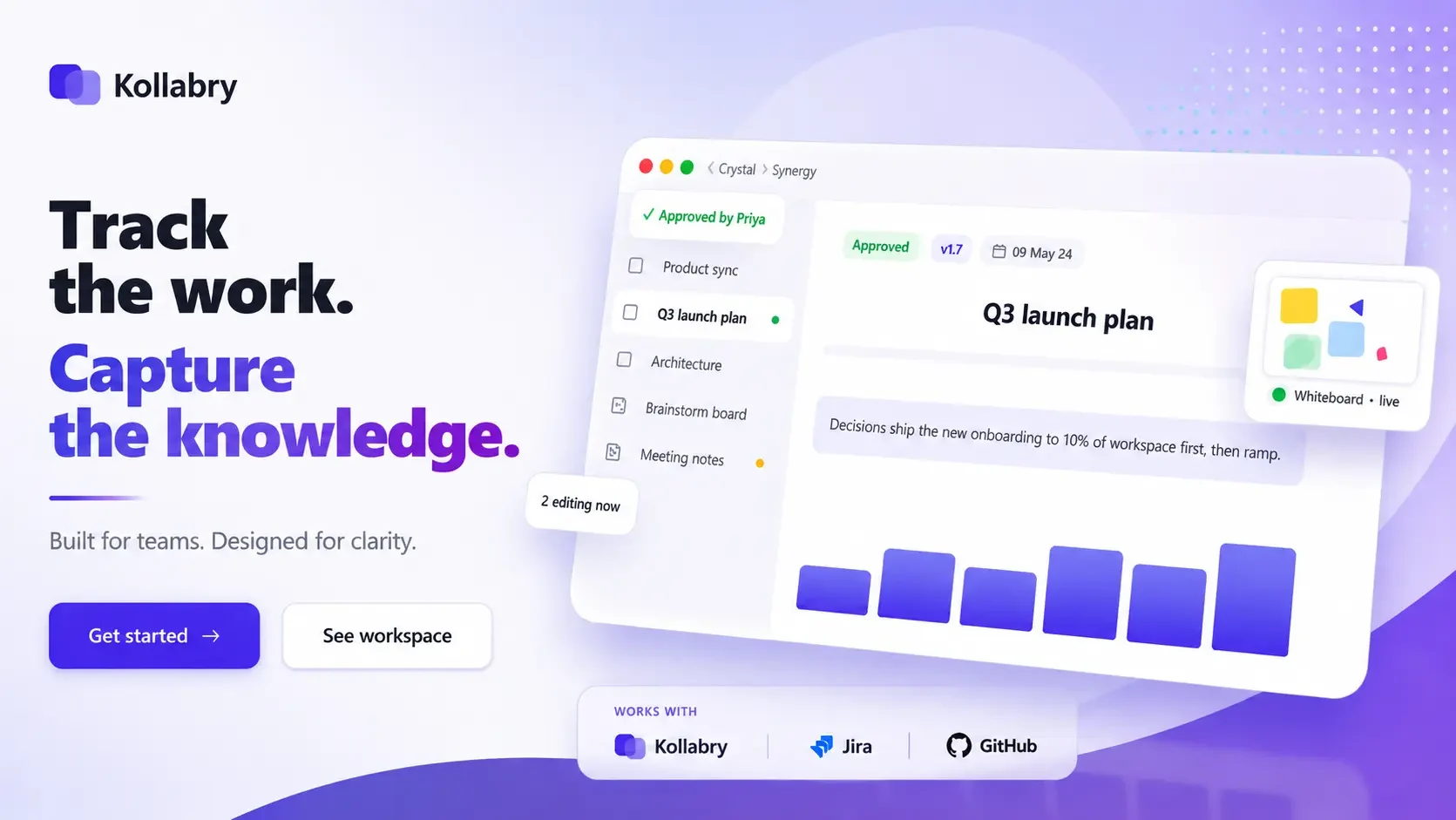
Before you ask
Answers to what teams usually ask before starting an AI engagement.
No. Most engagements start with the data you already have. Cleaning and structuring it is usually part of the first phase, not a prerequisite to begin.
Every system we ship has a defined approval gate and a logged trail of what it recommended versus what a person decided. Mistakes are caught, reviewed, and fed back into the next evaluation cycle.
Yes. We deploy into your existing infrastructure — AWS, Azure, GCP, or on-prem — rather than routing your data through a separate hosted product.
A working prototype against your real data typically lands within the first two to three weeks, before full production build begins.
Still have a question?
We're here to help. Reach out to our team.