
AI & Agentic Engineering
AI that does the work. You keep the decisions.
We don’t run pilots. We put AI into production and stay to run it.
We build AI agents that take on real operational work — inside your systems, on your accounts, with a person approving anything that matters. Strategy, engineering, governance and ongoing improvement from one team that uses this technology on itself every day.
A 60-minute conversation about your business, not a product demo.
- Diageo
- Aviation Gin
- Casa Famosa
- Lone River
- Bundaberg Rum
The business problem
Most organisations aren't short of AI ideas. They're short of AI in production.
The gap between an impressive demo and something the business actually relies on is where nearly every AI programme stalls. These are the four conversations we're brought into most often.
Something impressive was built, everyone was pleased, and then it never made it into the way work actually gets done. The gap is usually integration and governance, not the model.
"We keep proving it works and never using it."
Reading documents, copying between systems, chasing exceptions, assembling the same report every week. The work is necessary. It just doesn't need a person doing all of it.
"We’re paying experts to do admin."
The work is a good fit for automation, but the consequences of a wrong answer are real — money moves, a customer is affected, a regulator would ask questions. So nothing happens.
"Who’s accountable when it gets it wrong?"
There's pressure to have an answer and a fear of spending money on the wrong thing. What's missing is a costed view of where this genuinely pays back and in what order.
"We need a plan, not another tool."
AI capability
One team from business case through to continuous improvement.
Strategy, data, engineering, governance and ongoing operation sit in the same team — so nobody hands you a working prototype and walks away from the hard part.
Where this genuinely pays back in your business, what it costs, and the order to do it in.
Operational work run from start to finish, with people involved only where judgement is needed.
Intelligence built into the systems you already run, through controlled and monitored connections.
The unglamorous part that decides whether any of it works — access, quality, structure and permissions.
Approval points, complete records, and testing that proves quality before anything is trusted.
Watching accuracy, cost and behaviour after launch — because all three move over time.
How the work usually arrives
Take work off people, or put intelligence into products.
These need different things. Automating operations is mostly an integration and governance problem. Putting AI into a product is mostly a design and quality problem. We do both, and we're clear about which one you're actually asking for.
A process handled from beginning to end — reading what comes in, deciding what to do, acting in your systems, and escalating what it shouldn't decide alone.
- Process mapping
- Agent design
- System connections
- Approval points
- Exception handling
Search that understands intent, drafting that saves an hour, recommendations that fit the customer — built into your product rather than bolted on beside it.
- Feature design
- Quality testing
- Cost control
- Fallback behaviour
- User trust
And sometimes the answer isn’t AI at all. A properly built integration, a fixed process, or deleting a step nobody needed is often cheaper, faster and more reliable than anything we could train. We’ll tell you when that’s the case — even though it’s the smaller project.
Choose the part of the business closest to yours. We’ll show you where we’d start — and where we wouldn’t.
Proof, not a promise
We use this on ourselves before we sell it to you.
Forge is Oxytal's own AI platform, and it runs our delivery work every day — reading requirements, drafting plans, generating tests, running security checks. The version below is how it actually behaves. Agents clear the routine work, then stop and wait for a person. Try it: nothing goes live until you say so.
Switch the model above and the record updates — the same work, your choice of provider, running on your own accounts.
Control & governance
The questions your risk committee will ask.
We'd rather answer them here than discover them in week six. Every one of these is a commitment we'll put in the contract.
Everything runs on your credentials inside your own environment, not ours. If our relationship ends tomorrow, the system keeps working and you keep control of it.
Your information is not used to train any provider's model. We work under enterprise agreements that state this explicitly, and we'll share them with your legal team before you sign.
Consequential actions stop and wait. You decide which actions qualify, and you can change that list at any time without a development project.
What was asked, what was decided, which model answered and who approved it — timestamped and exportable, in a form an auditor will accept.
We build so the model underneath can be changed. When something better or cheaper arrives, you move to it — rather than rebuilding because your system only speaks one dialect.
You see what each process costs to run before it goes live, and limits are set so a mistake can't quietly become an invoice.
Why Oxytal
Why us and not one of the many firms now offering AI?
A fair question — almost every agency added an AI page in the last two years. Here's our honest answer.
Forge isn't a case study, it's how our own delivery work gets done. We live with the failure modes before you do — and that's a very different kind of experience from having read about them.
The hard part of an agent isn't the model, it's the integration, the error handling and the day it behaves unexpectedly at 2am. We were building production systems long before this technology arrived, and that discipline is what gets things live.
Approval points, records and cost limits are designed in at the start, not added when someone in risk asks. Retrofitting governance is how pilots die — we've watched it happen to other people's projects.
A good number of the ideas brought to us don't justify the spend, and some are better solved with a plain integration. Saying so costs us the bigger project, which is exactly why the advice is worth having.
Accuracy drifts, costs move, providers change their models underneath you. The people who built it watch all three and fix them, rather than handing you something that quietly degrades.
Senior accountability in your timezone, engineering depth and genuine overnight cover. Not a handover at 6pm to people you've never spoken to — one team, multiple locations, working to the same plan.
Evidence
Outcomes, not demonstrations.
The measure of an AI programme isn't how impressive it looks in a meeting. It's how much work it removed, how often it was right, and whether anyone still needs to check it twice.
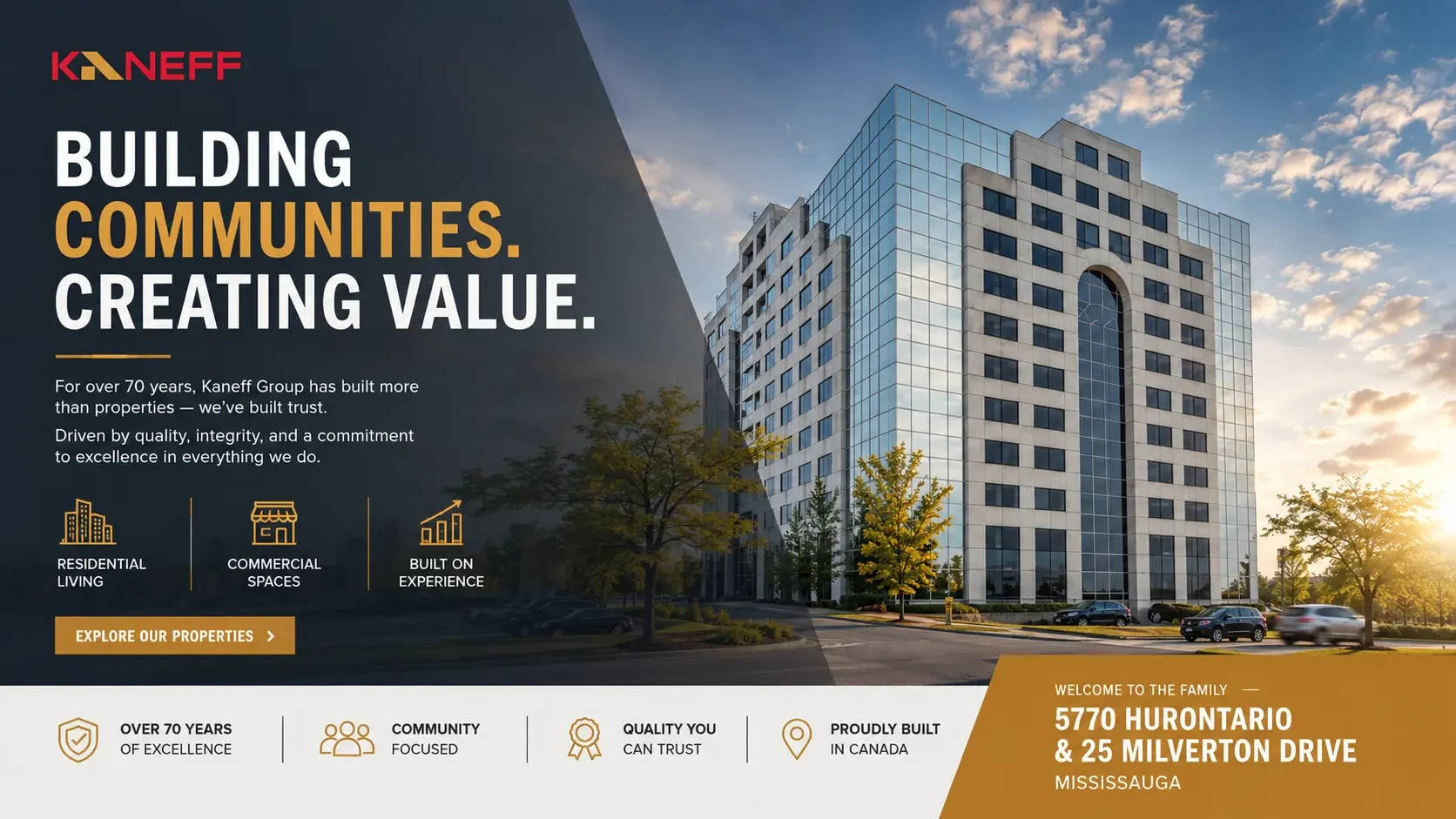
Kaneff Group held more than 7 TB of documents across on-premise servers — no naming standards, large volumes of duplicates, and thousands of scanned drawings and PDFs that no search could reach. Any supplier could have copied it all to the cloud. We read it first, then decided what deserved to move.
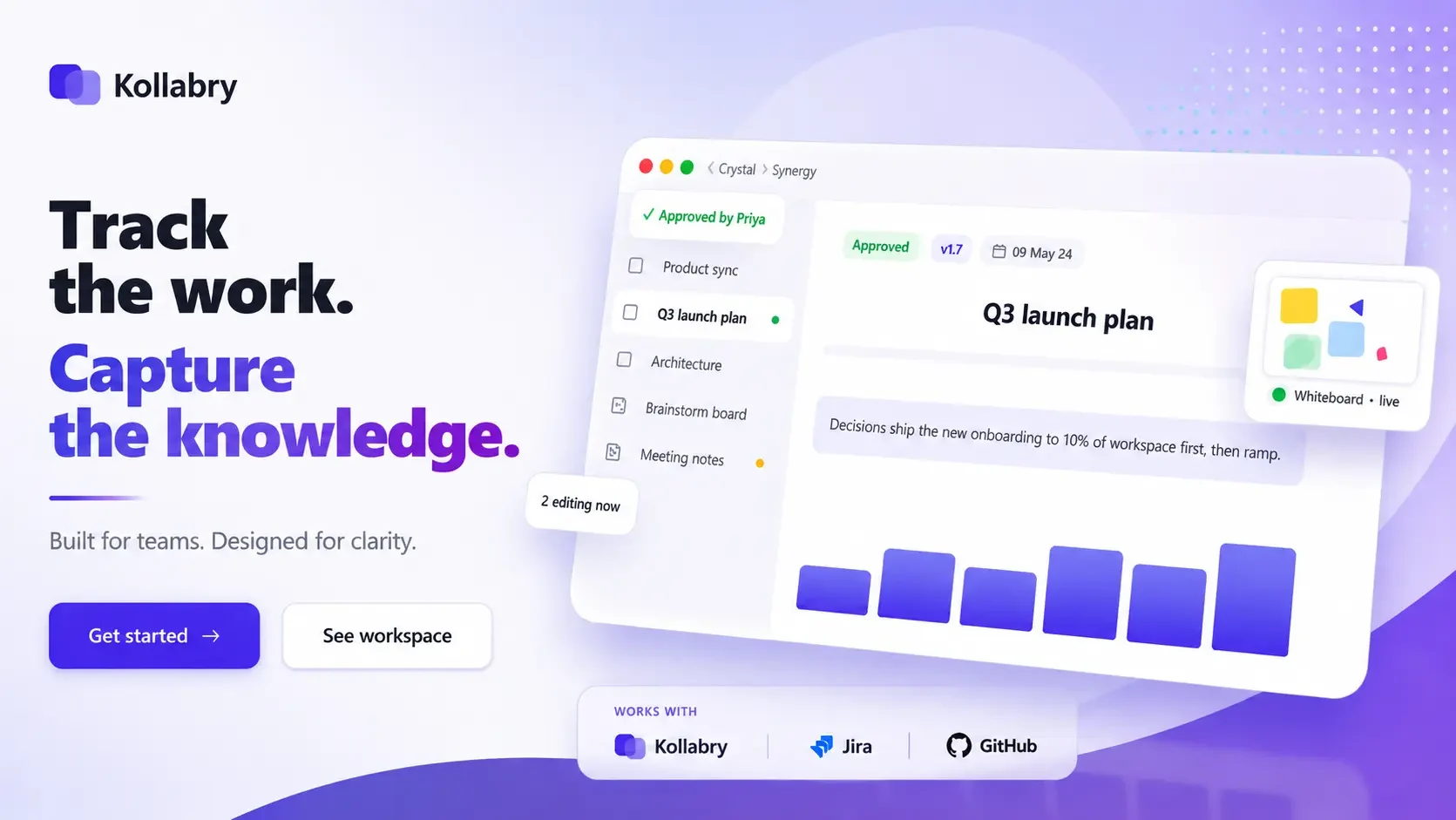
Kollabry is a delivery and knowledge platform we designed and built end-to-end — issues, sprints, and retros in the same workspace as a knowledge base and collaborative whiteboards, so plans and the decisions behind them never drift apart.
How we engage
Three ways in. None of them start with buying a platform.
Two to three weeks. We look at where your people actually spend their time, size the return on the three or four strongest candidates, and come back with a costed plan and an order of work.
We build the strongest candidate properly — connected to your systems, governed, measured against what it replaced. If the numbers don't hold up we say so and stop. If they do, the next one is faster.
We run what's live — watching accuracy, cost and behaviour, handling provider changes, and improving the system as your process changes. Reported monthly against the numbers we agreed.
Straight answers
What clients ask first.
Is our data used to train anyone's model?
No. We work under enterprise agreements with the providers that state this explicitly, and we'll put the relevant terms in front of your legal team before you commit to anything. Your information stays inside your own environment, running on your own accounts. If your policy requires models hosted entirely on your infrastructure, that's possible too — it costs more and performs differently, and we'll be straight with you about the trade-off.
What happens when it gets something wrong?
It will, occasionally — anything that handles judgement will. The question is what happens next, and that's a design decision we make with you. Actions with real consequences stop and wait for a person. Lower-stakes work runs automatically but is checked against samples, so quality is measured rather than assumed. Everything is recorded, so when something is wrong you can see exactly what happened and why. A system that can't be wrong safely isn't ready to be live.
How is this different from buying an AI product off the shelf?
Often it isn't, and when a product already does the job we'll tell you to buy it. Building makes sense when the work is specific to how your business runs, when it has to reach inside systems a product can't, or when the process is a genuine competitive advantage you don't want to standardise. If your need is generic, a subscription is cheaper than anything we could build.
Which model do you use?
Whichever suits the task, and we build so it can be changed later. Different models are better at different things and the ranking shifts every few months, so committing your business to one provider is a risk rather than a decision. Some organisations have a preferred provider for commercial or regulatory reasons — that's fine, we'll work within it and tell you where it costs you something.
How do we know it's actually saving money?
Because we measure the before, and we agree how we'll measure it before starting. Time spent on the process today, error rates today, cost per item today. Then the same numbers afterwards, including what the AI itself costs to run — which many suppliers leave out. If a process isn't measurable enough to prove a return, that's usually a sign it's the wrong place to start.
Who actually does the work?
A named team across Dublin and Chandigarh — the same people from the first workshop through to ongoing support. No account-management layer between you and the people doing the work. You'll meet them before anything is agreed.
Related services
AI rarely travels alone.
The connections agents need to do anything useful.
03Software EngineeringThe systems the intelligence lives inside.
04Cloud & TransformationThe foundations this all runs on.
01Digital StrategyDeciding what's worth doing before doing it.
Start with the work, not the technology.
Sixty minutes with the people who build these systems. Bring the process that eats your team’s week, the pilot that never landed, or the question your board keeps asking. We’ll tell you what we’d do, what it’s worth, and whether it’s worth doing at all.