
Digital Commerce
Commerce experiences built to perform.
We don’t sell a platform. We solve a commerce problem.
Every commerce project starts as a business question — why aren’t we converting, why does every order cost us three manual steps, why can’t we launch in a new market without a six-month project. We answer that first. The platform decision comes second, and sometimes the answer is the one you already have.
A 60-minute conversation. No pitch deck, no platform agenda.
- Bundaberg Rum
- Johnnie Walker Style
- PrintWorld
The business problem
Commerce rarely fails at the storefront.
It fails in the gap between the storefront and everything behind it — the systems, the manual work, the rules nobody wrote down. These are the four conversations we're brought into most often.
Spend is working and the funnel isn't. Usually it's checkout friction, page weight or a merchandising model that doesn't match how people actually buy.
"We’re paying more for the same orders."
Orders re-keyed into the ERP, stock reconciled by hand, invoices chased in a spreadsheet. Growth makes it worse rather than better.
"We can’t scale without hiring."
A new region, currency, language or B2B channel turns into a six-month project because the platform was built for one way of selling.
"Every expansion is a rebuild."
An unsupported version, a checkout customisation nobody dares touch, a developer who left. It works — until the day it doesn't.
"Nobody wants to be the one who breaks it."
Commerce capability
One team across the whole commerce lifecycle.
Strategy, design, engineering, integration and support sit in the same practice — so the person who scoped it is accountable for how it runs.
Where the revenue actually leaks, what fixing it is worth, and the order to do it in.
Merchandising, product discovery and checkout designed against your real catalogue.
Themed or headless builds, replatforms and migrations that keep SEO equity intact.
ERP, PIM, 3PL, tax and CRM connected so orders stop being re-typed by people.
Company accounts, contract pricing and new markets without a rebuild each time.
Patching, monitoring, peak-season cover and a roadmap — not a ticket queue.
Platforms
We build on both. That's the point.
An agency that only builds on one platform will always find a reason it's the right one. We've delivered on Shopify and Adobe Commerce for years, so the recommendation follows your catalogue, your operating model and your three-year cost — not our bench.
Fast to market, cheap to operate, and a checkout that converts because Shopify spends more on optimising it than any single merchant could.
- Storefront & headless
- Checkout engineering
- B2B
- Markets & expansion
- App development
Control over everything, including the parts you'd rather not own. Still the right answer when your rules genuinely can't be expressed in a SaaS platform.
- Upgrades & security
- Performance
- B2B
- Cloud strategy
- Replatform assessment
And sometimes we tell you to stay put. A replatform is the most expensive answer to most commerce problems. If your issue is checkout friction or a missing integration, we’ll say so — even though the smaller project is the less profitable one for us.
Version support windows move. Check yours in two clicks.
Why Oxytal
Why us and not another Shopify or Magento agency?
A fair question, and one you should ask everyone on your shortlist. Here's our honest answer.
Two established practices, not one plus a landing page. Our recommendation costs us money when it's the smaller project — which is exactly why you can trust it.
Oxytal ships and supports applications in the Shopify ecosystem. We've been through app review, performance budgets and merchant support from the other side — so our advice comes from operating software, not just delivering it.
Integration, cloud, data and AI are in-house practices at Oxytal. Your ERP work doesn't get subcontracted to a partner you never meet, and the people doing it sit in the same standups.
Forge, our own agent platform, runs our delivery lifecycle — requirements, test generation, security scanning. You get enterprise rigour at a pace that doesn't match the price tag, with a human approving every release.
Most agencies hand over the keys and move on. The engineers who built it run the support rota, with peak-season cover agreed in writing before the season starts.
Senior accountability in your timezone, engineering depth and genuine overnight cover. Not an offshore handoff at 6pm — one team, two hubs, continuous coverage.
Evidence
Outcomes, not screenshots.
Drinks and DTC brands are a harder commerce problem than they look — age verification, region-restricted shipping, allocation, and demand that spikes twentyfold in December. We've built for enough of them to know where it breaks.

Bundaberg has been distilling in Queensland since 1888. Its store sells licensed spirits, official merchandise and distillery tours through one Shopify checkout — under the Queensland Liquor Act, with a licence number on every page and every sale legally made from a single address in Bundaberg East. We support that store and enhance it continuously.

Johnnie Walker Style is a Thai-language merchandise store trading in baht. We moved it off a custom PHP build onto Shopify — same products, same customers, same URLs where it mattered, a different engine underneath. Since then we've supported and extended it. A migration that generates a story for the customer has usually gone wrong.
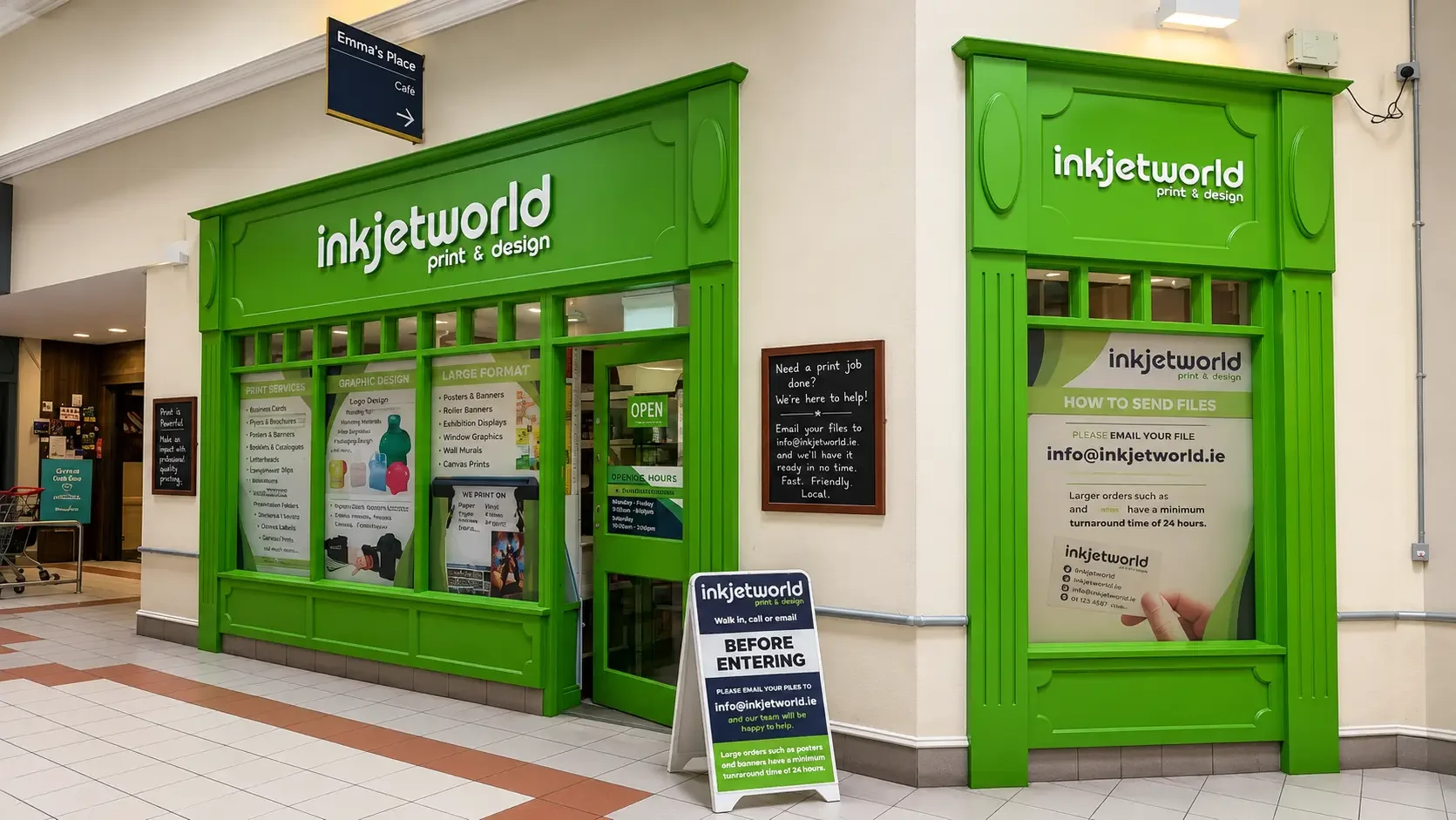
Print has no fixed product. The price depends on size, material, quantity, finish, page count and how many of those pages are colour. Some jobs can be sold from a shelf; others don't have a price until someone has understood them. We designed and built the shop that holds both — for a print business in a Kildare university town — and we still support it.
How we engage
Three ways in. All start with thinking, not a quote.
Two weeks. We look at the store, the systems behind it and where revenue is actually leaking, then give you a costed set of options with a recommendation and the reasoning.
Staged delivery with a stabilisation bridge, so you stay supported while the new platform is built. Cutover is rehearsed, not attempted, and designed around your trading calendar.
A named engineering pod on retainer — the people who built it. Patching, monitoring, conversion work and a quarterly roadmap you set.
Straight answers
What clients ask first.
Should we replatform or fix what we have?
Usually fix. A replatform is the most expensive answer to most commerce problems, and it resets a lot of institutional knowledge along with the code. If your issue is conversion, page speed or a missing integration, that's a project measured in weeks. We'll only recommend replatforming when the three-year cost of staying genuinely exceeds the cost of moving — and we'll show you the arithmetic.
How do you decide between Shopify and Adobe Commerce?
By where your complexity lives. If it's commercial — merchandising, promotions, markets, DTC growth — Shopify usually wins on total cost once you price in hosting, patching and the engineering hours a self-managed platform quietly consumes. If it's structural — catalogue depth, ERP-driven pricing, B2B approval hierarchies — Adobe Commerce is often cheaper over three years than rebuilding those rules in SaaS. We model both before recommending either.
What does a commerce project actually cost?
We won't quote a range on a web page, because the honest answer depends on catalogue size, integration count and how much of your process is currently undocumented. What we will do is fix the price of the first two weeks, so you get a costed plan before committing to a build. Most clients find the review pays for itself by removing one bad assumption from the scope.
Who actually does the work?
A named pod across Dublin and Chandigarh — the same engineers from build through to support. No account-manager layer between you and the people writing the code, and no reassignment after go-live. You'll meet them before you sign anything.
Related services
Commerce rarely travels alone.
ERP, PIM and 3PL connected to the storefront.
07AI & Agentic EngineeringAutomating the operational work behind each order.
04Cloud & TransformationInfrastructure that holds through peak trading.
02Experience DesignThe research behind why people don't convert.
Start with the business problem.
Sixty minutes. Bring the thing that’s actually worrying you — the number that won’t move, the process that needs three people, the platform nobody wants to touch. We’ll tell you what we’d do, and whether we’re the right people to do it.