Case study · Diageo
Training a workforce you don't employ.
Brand promoters represent Diageo at events and points of sale — but they work for third-party agencies. No company email, no induction day, no HR system. We built the platform that makes sure every one of them understands the standards, in their own language, before they represent the brand. It has been running since 2022.
- Client
- Diageo — Corporate Relations
- Sector
- Drinks & FMCG
- Services
- Experience Design · Software Engineering · Support
- Languages
- 17
- Live since
- September 2022

Accountability without an employment relationship.
Brand promoters are the people pouring the drink, running the tasting, staffing the stand. To a customer at an event they are the brand. But they're employed by third-party agencies, often for a single campaign, across dozens of markets and many languages.
That creates a gap most large organisations recognise. Diageo carries the reputational and ethical responsibility for how these people behave — and for their safety while they're doing it — without any of the usual mechanisms. There's no corporate login to assign, no onboarding week, no line manager inside the business. Turnover is high by design, because campaigns end.
Diageo's Corporate Relations team needed every promoter to understand the company's values, principles and guidelines before an event — and, just as importantly, to know how to handle a difficult situation, what harassment looks like, and exactly how to report an incident. In whatever language they actually think in.
Training that only works for employees doesn't solve this. The platform had to reach someone hired last week, by another company, who may never log in from a laptop.
Three constraints shaped every decision.
None of them are visible in a screenshot, and all three would have sunk the project if they'd been treated as details.
Translation is the easy half. Each market needed its own managed content, its own review cycle and the ability to reflect local law and local sensitivity — while the core standard stayed identical everywhere. Adding an eighteenth market had to be a content task, not a development project.
These users have no company account. Access had to be straightforward for someone with a personal phone, possibly on mobile data, possibly in a venue with poor signal — while still producing a reliable record of who completed what.
Modules covering harassment and incident reporting aren't ordinary content. Someone may be reading them because something has already happened. Tone, clarity and the visibility of the reporting route mattered more than any visual decision on the project.
A training platform and the admin system behind it.
Two halves that had to work as one: the experience the promoter sees, and the tooling the market teams use to run it.
The training walks promoters through Diageo's core values, principles and guidelines, then through the situations they'll actually meet — a difficult customer, a colleague behaving badly, a moment where they need to say no.
- Short modules that survive being completed in a break, not a training room
- Progress preserved between sessions, so a dropped connection costs nothing
- Language chosen by the person, not assumed from their location
- Assessment that confirms understanding rather than attendance
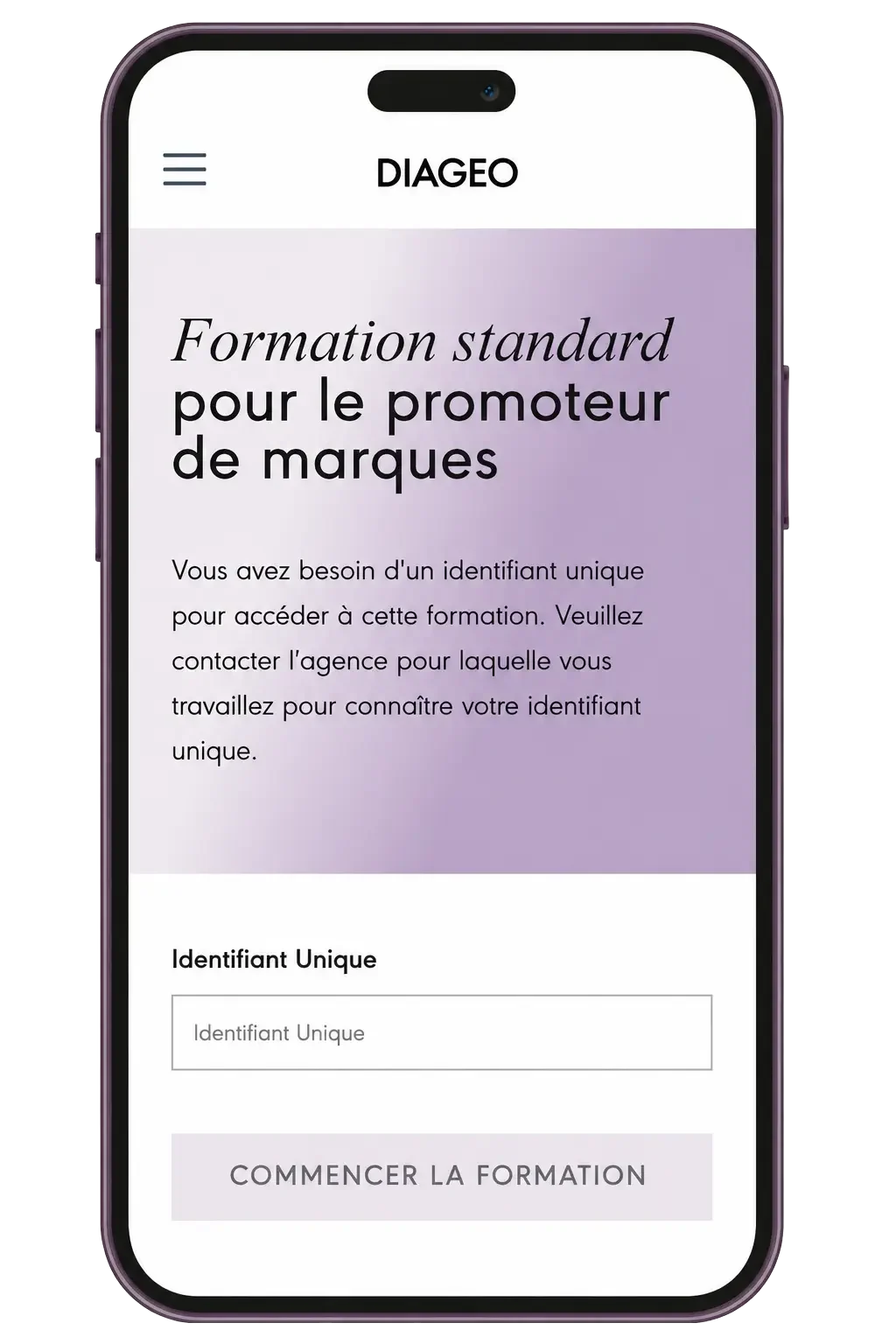
Every market team manages its own content in its own language, working from a shared structure. The standard doesn't drift between markets, but the wording, examples and local reporting routes are theirs to control.
- Content managed per language without touching the application
- Layouts built to absorb text that expands or contracts by a third
- A new market added as a content exercise, not a release
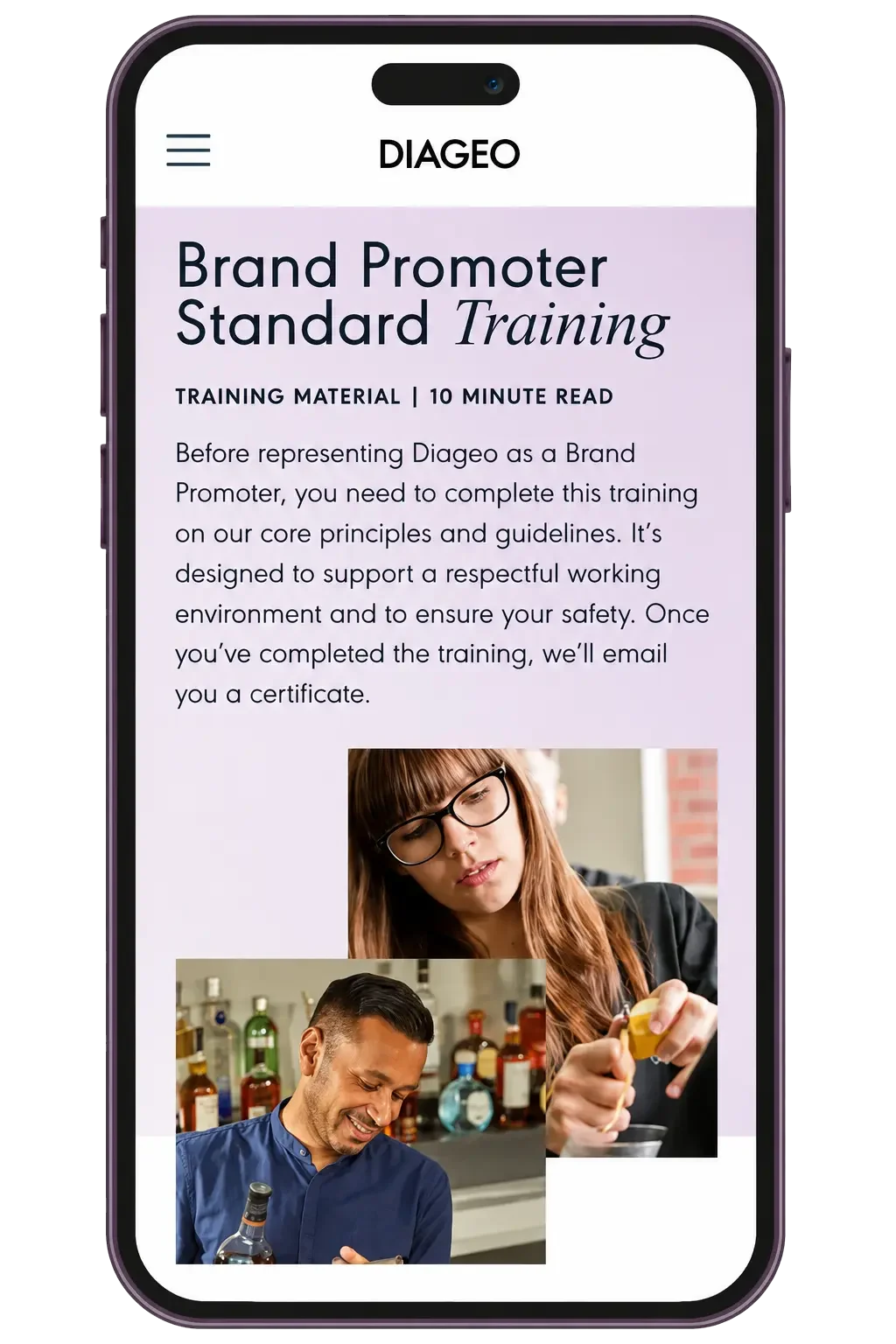
Market and Corporate Relations teams manage promoters, publish content and see completion across their region. Without this, the training would be a website — with it, it's a system the business can rely on and evidence.
- Promoter records managed by the teams who actually work with the agencies
- Completion visible per market, per campaign, per person
- Records exportable as evidence when someone asks for proof
- Roles and permissions that keep market content in market hands
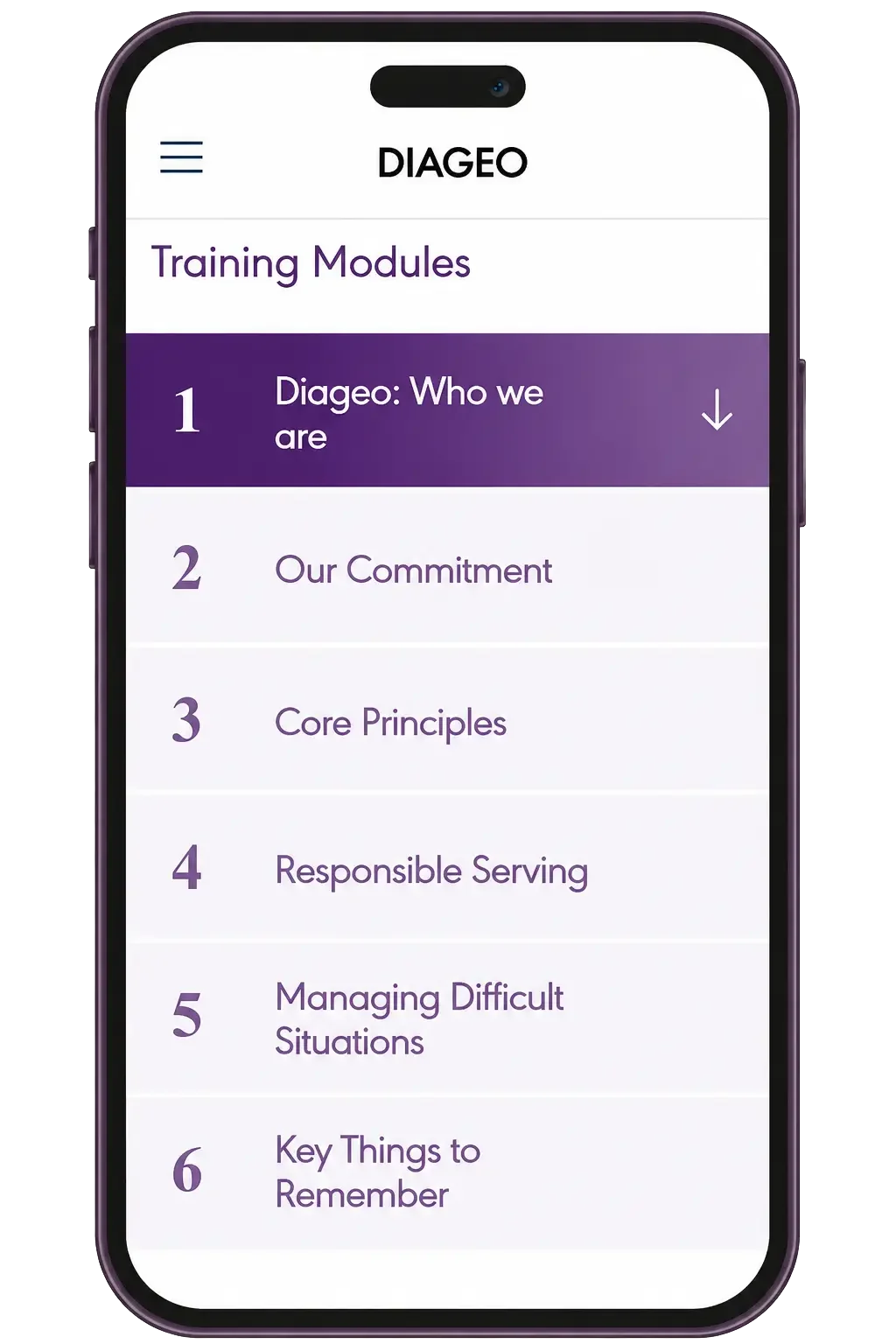
Designing the part of a product you hope nobody needs.
Most of this platform is ordinary training. One part isn't. The modules covering difficult situations, harassment and incident reporting carry a different weight, because someone may be reading them after something has already happened to them — at an event, far from anyone they work for directly, unsure whether it's their place to say anything.
That changed how we designed it. Not the visual language, the behaviour.
Someone who needs it shouldn't have to navigate a course to find it. It stays reachable throughout, not parked at the end of a module.
Policy wording protects the organisation. Clear wording protects the person. Every market reviewed this content in its own language rather than accepting a translation of the English.
Every path through this material ends with something the person can actually do, and who they can contact in their own market — never with a definition and nothing else.
No timers, no progress pressure, no gamification anywhere near this content. It's read at the reader's pace, and it can be revisited without restarting anything.
Built with the brand team, not for them.
Corporate Relations knew the standard inside out. We knew how to make it reach people who'd never seen a Diageo system. The work happened in the overlap.
Working sessions with the brand team to learn what the training genuinely had to achieve — and where existing material was being misread, skipped or quietly ignored in the field.
Not a training room with a laptop. A phone, between shifts, in a second language, on a connection that may drop. Every interface decision was tested against that reality.
Multilingual structure designed in at the start rather than retrofitted. Retrofitting language support is one of the most expensive corrections in software, and it always shows.
Verified across current browsers and the range of devices promoters actually carry — including older Android handsets, which is where this kind of platform usually fails.
Live since 2022 and still ours. New markets, content updates, platform maintenance and enhancements delivered on an ongoing basis rather than through a change request process.
Launched in 2022. Still ours.
Plenty of agencies could have built this. The measure we'd rather be judged on is that it has been running continuously ever since, supported by the same team, absorbing new markets and content changes without a rebuild. A training platform that quietly stops being maintained is worse than none at all — it gives an organisation false confidence in a record it can no longer trust.
Ongoing content updates, new market onboarding, platform maintenance and enhancements — delivered by the team that built it.
Chosen for a decade, not a launch.
A platform that has to be maintained across many markets for years rewards conventional, well-understood choices over interesting ones.
- React single-page application
- Responsive, mobile-first
- Progressive content loading
- Session persistence
- Managed content per language
- Structured module model
- Market-level publishing
- Versioned updates
- Role-based access
- Promoter records
- Completion reporting
- Exportable evidence
- Cross-browser verification
- Real-device testing
- Accessibility considerations
- Ongoing maintenance
Related case studies.
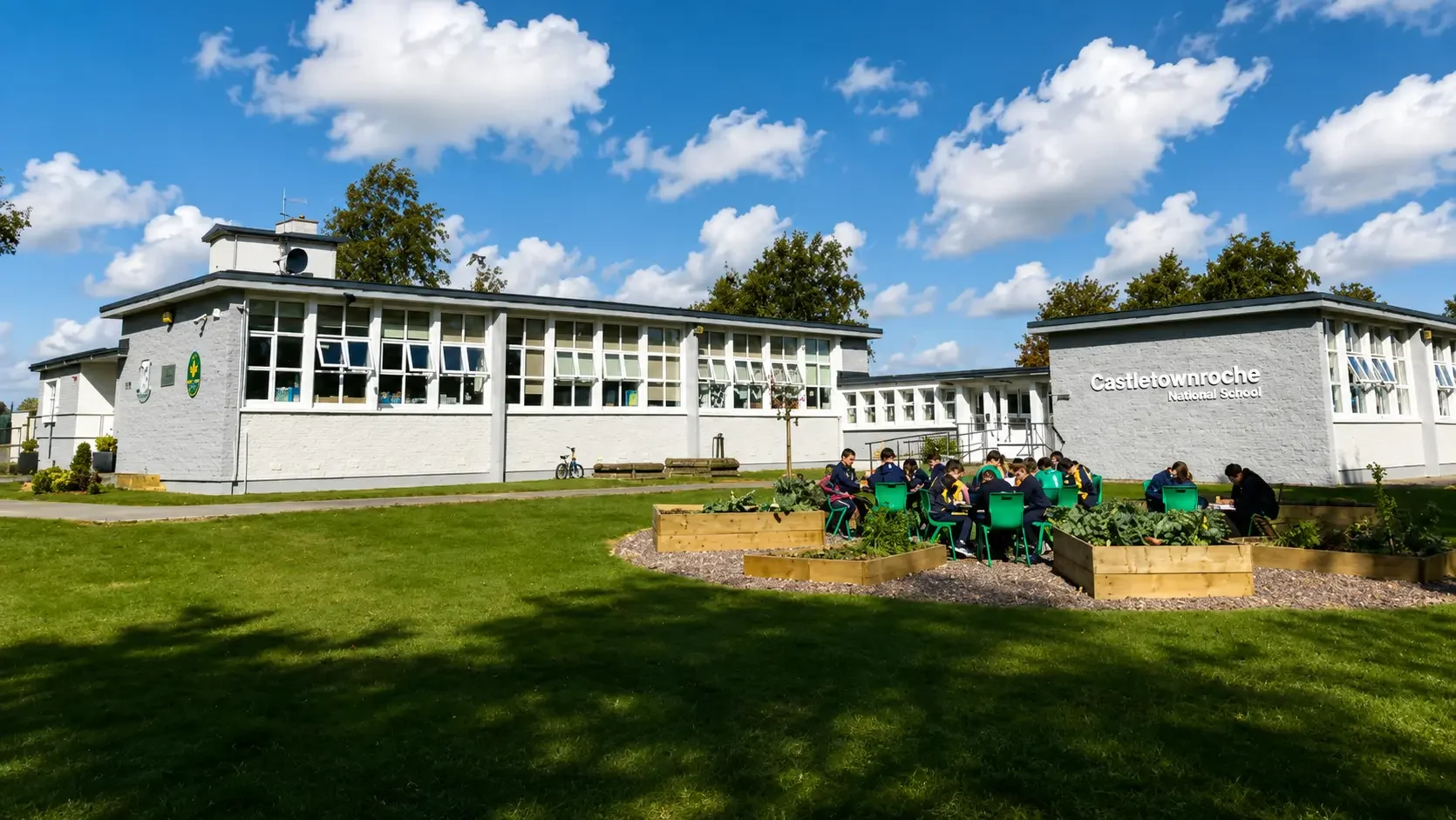
School sites are usually designed as prospectuses — built to persuade a family who hasn't decided. But almost every visit comes from a parent who enrolled years ago and needs one thing: the stationery list, the finish time, or whether there's school on Monday. Usually on a phone, usually while doing something else. We designed for them first, and the prospectus second.
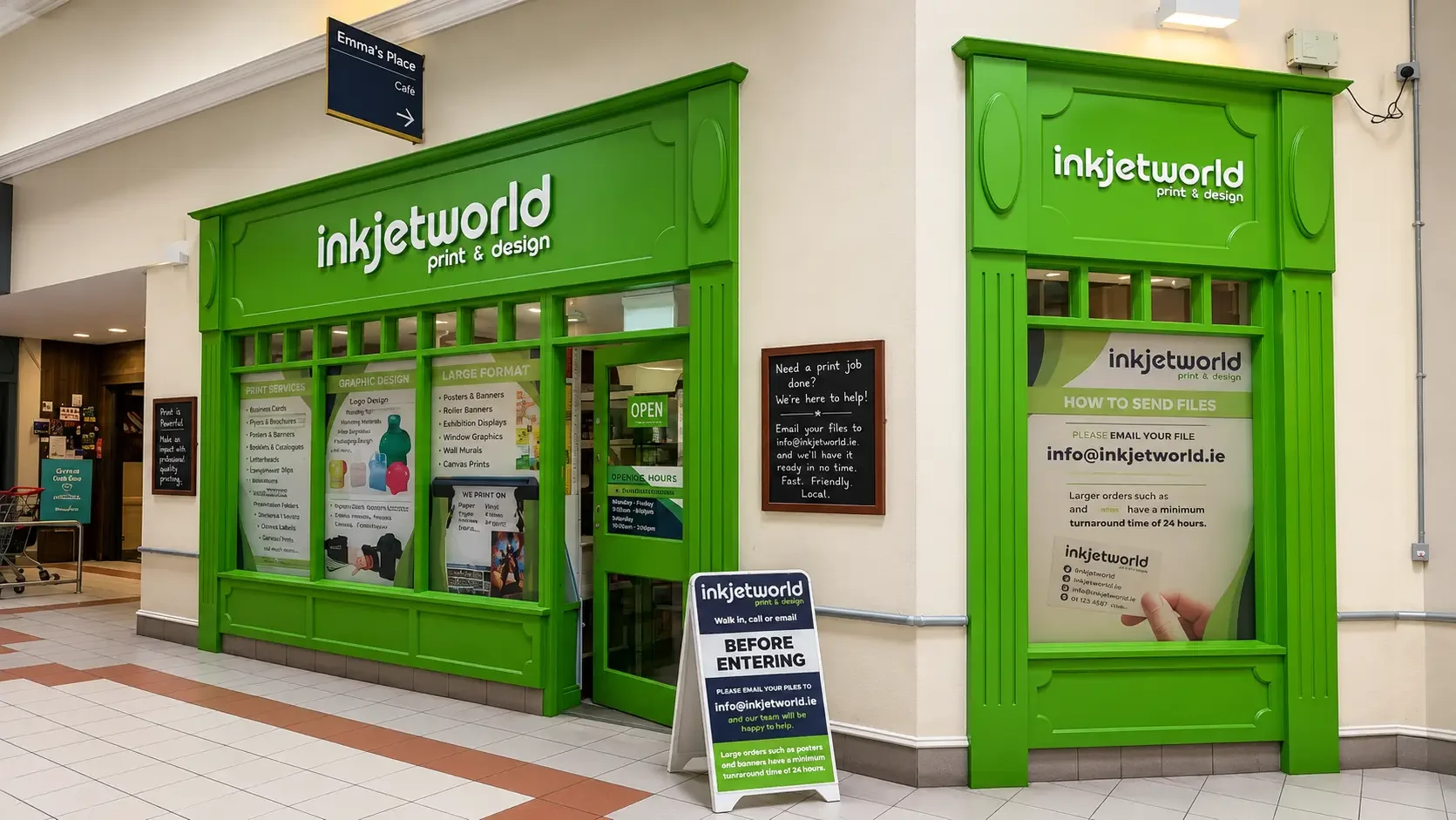
Print has no fixed product. The price depends on size, material, quantity, finish, page count and how many of those pages are colour. Some jobs can be sold from a shelf; others don't have a price until someone has understood them. We designed and built the shop that holds both — for a print business in a Kildare university town — and we still support it.